
Fancy Colored Diamonds
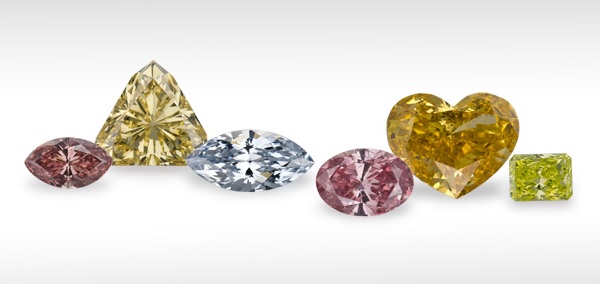
Fancy color diamonds in a variety of hues and saturation. Credits: GIA
Did you know that diamonds can come in almost any shades of yellow, blue, green, red, purple, pink and even as mixtures of different colors? In fact, a fancy colored diamond is so rare that it is estimated that only 1 out of 10,000 carats of polished diamonds display fancy color.
In this section of Beyond4Cs.com, I will reveal everything that you need to know about fancy color diamonds and the important stuff you need to take note of. You are also going to find out the insider tips on how and where to buy a beautiful colored diamond.
Let’s jump right in!
Here is a list of topics we will be covering:
- What Are Fancy Colored Diamonds?
- How Do Diamonds Get Their Colors In Natural Conditions?
- The Insider Guide to the 4Cs of Fancy Color Diamonds
- How Are Fancy Color Diamonds Priced?
- Diamond Color Treatments And Enhancements
- What You Need to Know About Lab Grown Fancy Color Diamonds
- Where is the Best Place to Buy a Fancy Color Diamond?
- Other Articles Related to Fancy Colored Diamonds
What Are Fancy Colored Diamonds?
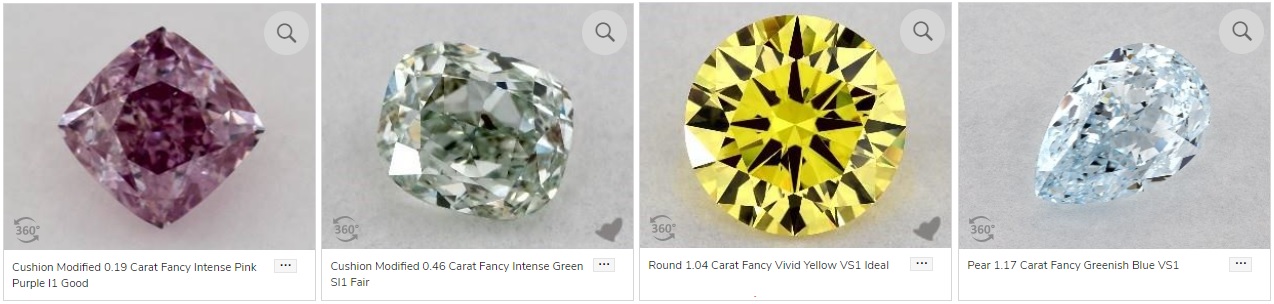
Most of the diamonds you come across in jewelry stores lie in the normal color range of D (colorless) -Z (light yellow or brown) on the diamond grading scale.
On the other hand, fancy color diamonds have color saturation (e.g. intense yellow) or hue (e.g. blue, pink) that fall off this scale. Interestingly, fancy color diamonds can come in almost any color imaginable. In nature, the rarest colors are red, green and purple while yellow and brown are the most commonly found colors.
Unlike diamonds from the normal color range, the GIA grades fancy color diamonds in their face up view using a separate system. During grading, the color of the diamond will be assessed and designated with a Fancy Light, Fancy, Fancy Intense, Fancy Vivid, Fancy Dark or Fancy Deep based on the color strength it has.
How Do Diamonds Get Their Colors In Natural Conditions?
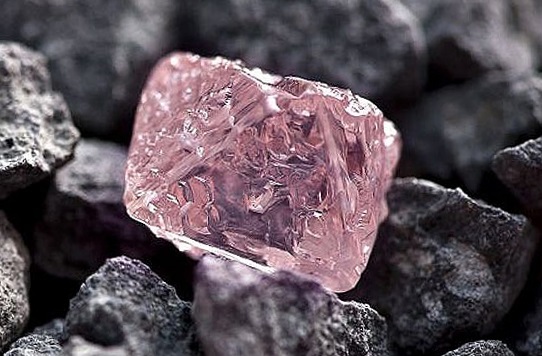
The Pink Jubilee was uncovered in Argyle on Feb 22, 2013 by mining company Rio Tinto.
The color of a diamond is largely determined by the presence of trace elements inside its chemical composition. For instance, the presence of nitrogen gives the diamond a yellowish tint. Since nitrogen is so abundant in Earth’s environment (about 70% of air is made up of nitrogen), it is no surprise that the majority of diamonds display yellowish tones. On the other hand, the presence of Boron results in a bluish looking hue which is super rare and is highly valuable.
In nature, when diamonds are formed or deposited near radiation sources deep within the Earth, a colorless rough diamond can turn green over time. The intensity of the green hue is directly proportional to the type of radiation (gamma/neutron radiation yields better colors) and the duration in which the diamond was exposed to.
Sometimes, rough diamonds with sizable mineral inclusions like peridots (dark green) or garnets (red) may exhibit color flashes based on the color it picks up from the inclusions.
Another phenomenon that can create fancy colored diamonds comes via strain and color zone defects in the crystal lattice. As a result of a distorted lattice, the diamond absorbs certain wavelengths of light and displays unusual colors like pink and purple. The world famous pink diamonds from Australia’s Argyle mine are created by this process.
The Insider Guide to the 4Cs of Fancy Color Diamonds
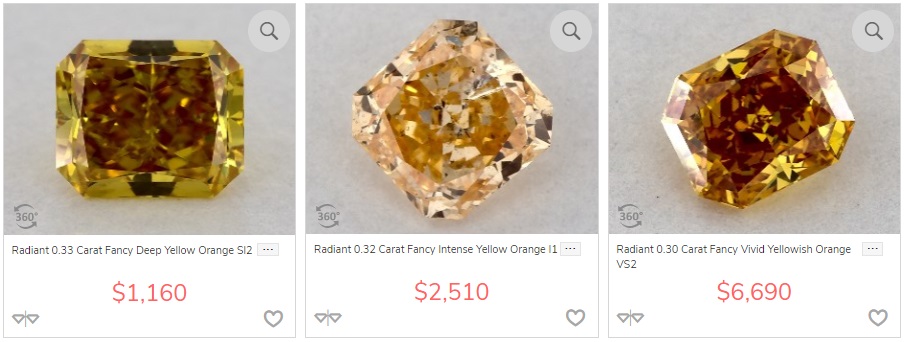
Comparison of orange diamonds with different color tones and saturation.
Similar to D-Z colored diamonds, the quality of a fancy colored diamond is also determined by the 4Cs: cut, color, clarity and carat. If you had been following my work on Beyond4Cs.com, you probably know that cut quality is the C that I prioritize the most when buying a white diamond.
However, when it comes to fancy color diamonds, the most important attribute of the 4Cs is color. This is because color has the biggest impact on the value and appeal of a fancy color diamond. Even the smallest difference in tonality and hue can create a drastic difference in value.
In the normal D-Z color range of diamonds, cut quality is a desirable attribute to improve the diamond’s sparkle and brilliance. When it comes to fancy color diamonds, cut is used to influence the diamond’s color (e.g. better saturation) instead of maximizing light return.
In order to create a richer and more intense color, fancy color diamonds are often cut with deep pavilion angles and thick girdles to better retain body color. Also, you will typically find diamonds polished to fancy shapes like cushion or radiant shapes as these cutting styles generally improves the yield from the rough stone.
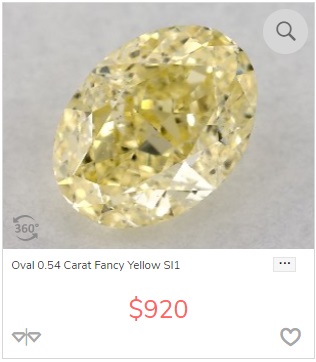
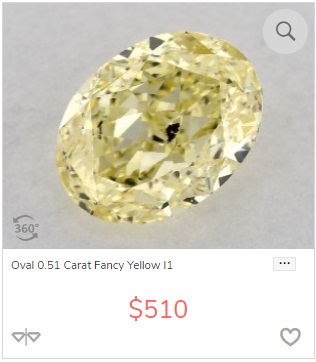
Eyeclean vs non-eyeclean diamond comparison.
With fancy color diamonds, most buyers are generally more forgiving of a diamond’s clarity. Even if a diamond has relatively low clarity or numerous inclusions, a fancy color diamond can still be highly prized by collectors.
In my opinion, as long as the diamond has no eye visible inclusions and doesn’t threaten the gem’s durability, clarity is something that I won’t get overly worried about.
Carat weight is a measure of how much the diamond weighs. Large sized fancy color diamonds are extremely rare and are significantly more valuable than smaller sized diamonds.
How Are Fancy Color Diamonds Priced?
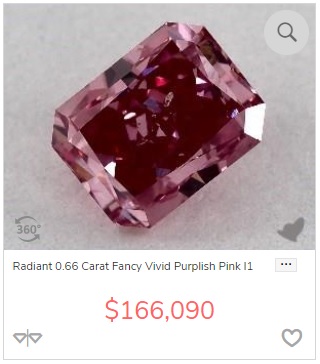
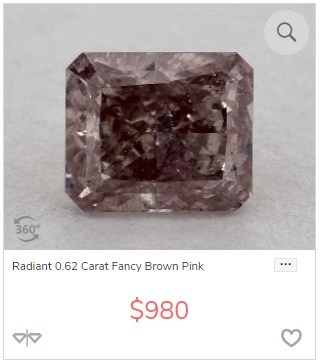
Price comparison of 2 diamonds with different primary hues and saturation.
In the normal D-Z color range, diamonds with more color generally decrease in value. On the contrary, the value of a fancy color diamond would generally increase with stronger hues and intensity.
When it comes to diamond prices for fancy color gemstones, prices can vary wildly depending on the carat size and clarity ranges. At the end of the day, it really boils down to the combination of hue, tone and saturation that the diamond displays.
Yellows and browns are the most common fancy colors and they are usually priced about 50-80% of a comparable colorless diamond. This is due to their relatively high supply and less attractive hue amongst consumers.
In the world of fancy color diamonds, red, green, purple, orange, pink and blue are the rarest colors (in order of rarity) that seldom appear in the market. And when they do, you usually see astronomical prices for these goods at record-breaking auctions.
Diamond Color Treatments And Enhancements
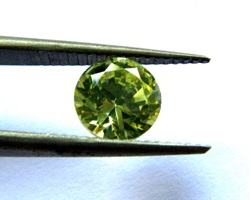
Irradiated yellowish-green diamond.
Because naturally created fancy colored diamonds are so rare and desirable, they usually command sky-high prices. In order to make fancy colored diamonds more affordable, processes to enhance and treat a diamond’s color artificially are pretty common nowadays.
Blue and green color diamonds are usually created via the irradiation processes. With these methods, less attractive rough stones can be turned into richly colored diamonds which makes them more salable.
Diamonds can also be heated at high pressure and high temperatures to modify the atomic structure of diamonds. This method is generally used to transform brown colored diamonds into more appealing colors like orange and yellow.
What You Need to Know About Lab Grown Fancy Color Diamonds
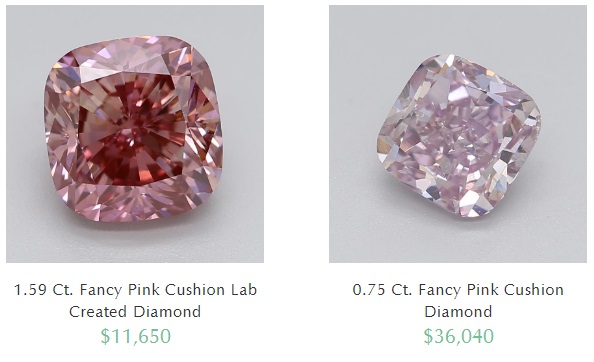
Comparison of lab-created vs natural fancy color diamonds – Brilliant Earth.
With modern technology, high quality synthetic diamonds can also be created in a laboratory from scratch. Using HPHT and chemical vapor deposition processes, different colored diamonds can be created with carefully controlled recipes.
In essence, a lab created diamond has identical physical and chemical characteristics of a naturally mined diamond. The only difference is that its creation takes place in a lab in a matter of weeks instead of millions of years inside the mantle of the Earth.
If you want to own and wear a fancy colored diamond without having to pay 6-7 figures price tags, lab created diamonds are what you should consider instead of buying one that is color treated.
Where is the Best Place to Buy a Fancy Color Diamond?
If you are in the market for a natural fancy colored diamond and come across a deal where prices are too good to be true, you can be sure that the seller is trying to scam you with a misrepresented product. A telltale sign of this is that the diamond isn’t certified by GIA.
Remember this rule: You always get what you pay for.
That said, I have nothing against synthetic or treated diamonds as they satisfy demand in a certain market segment. The important point I want to highlight here is that you should be paying the right price for the right stone.
The price difference between a natural and a synthetic colored diamond is enormous. If a diamond is being sold as a natural stone, make it a point to request a GIA grading report because it helps validate its authenticity.
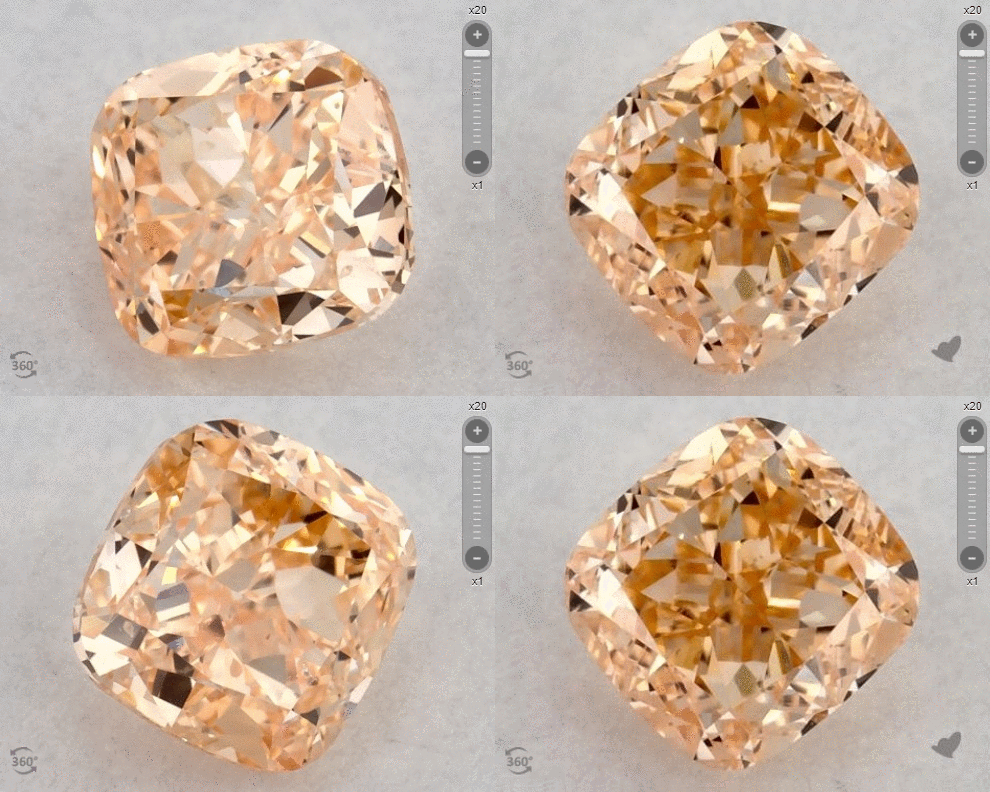
A fancy intense yellow-orange cushion cut diamond listed at James Allen.
So, where is the best place to buy a natural fancy color diamond? Well, I highly recommend James Allen for their superb selection of GIA certified diamonds and risk-free sales policy. In fact, they have one of the biggest inventory of fancy color diamonds in the world.
More importantly, you get to interact and see exactly how the diamond looks like in real life using their video technology. This is one of the key factors that will help you choose and make the correct decision when shopping for a colored diamond. Click this link to check them out for yourself!
Articles Related to Fancy Colored Diamonds:
– How Are Fancy Colored Diamonds Graded?
Fancy colored diamonds are graded differently from diamonds in the traditional D-Z color scale. Besides using different nomenclatures, the methodology used is also different. Find out more information in this article.
– How Pink Diamonds Are Formed?
Owning a pink diamond is like a dream come true for many women. However, they come at a high price due to their extreme rarity in nature. This article will take you behind the scenes to how they are formed.
– How to Buy Pink Diamond Engagement Rings The Right Way
In this article, I’m going to show you the ins and outs of buying a pink diamond ring. You will learn how to make smart decisions and how to avoid expensive mistakes while shopping for one.
– The Beginner’s Guide to Fancy Yellow Color Diamonds
Yellow is the most common color that consumers buy when shopping for a fancy color engagement ring. In the industry, they are sometimes called canary diamonds because of their color resemblance to the canary bird.
– Unwrapping a Fancy Intense Yellow Cushion Cut Diamond Ring Purchased From Leibish
Recently, I bought a fancy intense yellow diamond ring to celebrate an anniversary with my wife. I documented the entire unboxing video of the parcel that was sent by Leibish to reveal a stunning diamond ring.
Related Articles
About The Website:
Leave A Comment
Latest Posts From Our Blog


Join Us On Social Media!



Visit The Gallery For Ideas!

2 Comments
Good Day Paul Gian!
I need your help to choose which diamond is better both are priced about the same.
1. Fancy Vivid Yellow Orange 0.34 ct cushion shape I1 clarity GIA certified no clarity on GIA with video link at youtu.be/rwE-0NYwOHw
2. Fancy Vivid Yellow Orange 0.35 ct heart shape SI2 GIA certified no clarity on GIA with video link at vimeo.com/214480492
#1 looks more orange and transparent but I1 according to merchant
#2 looks more yellow face up but that could be just the face up yellow sparkle but it is SI2 according to the seller.
Both of them are none fluorescent according to the seller.
Which one do you think is more transparent & a better buy?
As an industry professional, let me tell you that it’s a game jewelers play with consumers with the GIA report. The reason why they CHOOSE not to get GIA to grade clarity is that the clarity rating is terrible and that affects the salability of the diamond.
The diamond “I1” diamond has very obvious inclusions. There are problems with clarity in both these diamonds. If clarity wasn’t an issue, it’s as simple as getting GIA to list it. Why don’t they do it?
It’s the same case for the second diamond as well. If you want to buy fancy colored diamonds, my advice for you is to stick with the FULL GIA report.